Choosing the best health insurance plan for your family in India has never mattered more — and never been more confusing. Medical inflation runs at 12–14% a year, a single week in a metro ICU can cost ₹3–5 lakh, and yet the market offers hundreds of plans with fine print that differs in exactly the places that decide whether your claim gets paid.
This guide walks you through everything our advisors check before recommending a family health policy: the type of plan, the right sum insured, the seven clauses that matter more than the premium, add-ons worth buying, and the claim process itself. Read it once and you will evaluate any policy brochure like a professional.
Why Your Employer’s Cover Is Not Enough
Most salaried Indians rely on a corporate group policy of ₹3–5 lakh. Three problems with that:
- It ends when the job ends. Resignation, layoff or retirement leaves your family uninsured overnight — often at an age when fresh cover is expensive or restricted.
- It is usually too small. ₹3–5 lakh barely covers one major hospitalisation for one member in a metro city.
- You do not control it. Employers change insurers, trim benefits, and add co-pays without asking you.
Treat the corporate policy as a bonus layer. Your family’s primary protection should be a personal policy you own and control.
Types of Family Health Insurance
1. Family Floater
One sum insured shared by all covered members (typically self, spouse, children). Cost-effective because the whole family rarely gets hospitalised in the same year. Best for young families where all members are broadly healthy.
2. Individual Policies
Separate sum insured per person. Costs more in total but one member’s big claim cannot exhaust cover for the others. Recommended when a member has a chronic condition, and for senior parents.
3. Separate Senior Citizen Policy for Parents
Never add elderly parents to your floater — the premium for the entire policy gets priced on the oldest member. A dedicated senior citizen or parents’ floater keeps your family plan cheap and gets your parents cover designed for their age group.
4. Top-up and Super Top-up Plans
These pay only after expenses cross a threshold (the deductible). A ₹5 lakh base policy plus a ₹20 lakh super top-up with a ₹5 lakh deductible gives you ₹25 lakh of effective cover at a fraction of the cost of a ₹25 lakh base plan. This base + super top-up structure is the highest-value configuration for most families — and one of the most common recommendations we make.
How Much Sum Insured Does a Family Need?
Our working rule for a family of four:
| City tier | Minimum | Comfortable |
|---|---|---|
| Metro (Delhi NCR, Mumbai, Bengaluru...) | ₹10 lakh | ₹25 lakh (base + super top-up) |
| Tier-2 city | ₹7.5 lakh | ₹15–20 lakh |
| Tier-3 / town | ₹5 lakh | ₹10–15 lakh |
Why so high? A cardiac bypass in a good metro hospital costs ₹4–6 lakh today; at 12% medical inflation it will cost roughly double in six years. A cancer treatment cycle can cross ₹15–20 lakh. The sum insured you buy today has to make sense ten years from now, because switching insurers later restarts waiting periods (unless you port correctly — more below).
The 7 Clauses That Matter More Than Premium
1. Room rent limit
The single most expensive trap in health insurance. If your policy caps room rent at 1% of sum insured (₹5,000 on a ₹5 lakh policy) and you occupy a ₹9,000 room, the insurer applies proportionate deduction — slashing the entire bill, not just the room charge, by the same ratio. Prefer policies with no room rent cap or at least “single private AC room” eligibility.
2. Co-payment
A co-pay clause makes you pay a fixed percentage (10–30%) of every claim. Acceptable in senior citizen plans where it keeps premiums viable; avoid it in a regular family floater.
3. Waiting periods
Standard structure: 30 days initial (except accidents), 2–4 years for pre-existing diseases (PED), 1–2 years for specific procedures (cataract, hernia, joint replacement). Shorter is better; some plans sell PED waiting-period reduction as an add-on — valuable if any member has diabetes, hypertension or thyroid conditions.
4. Disease-wise sub-limits
Some budget plans cap payouts per illness (e.g., ₹2 lakh for cardiac). A ₹10 lakh policy with sub-limits can behave like a ₹2 lakh policy exactly when you need it. Prefer no sub-limits.
5. Restoration / refill benefit
Restores the sum insured if it gets exhausted during the year — vital for floaters, where one member’s claim can leave the rest uncovered. Check whether restoration works for the same illness and the same person, or only for unrelated claims; the former is far more useful.
6. No-claim bonus (NCB)
Good plans increase your sum insured 25–50% per claim-free year, up to 100–200%. Check whether a claim erases the accumulated bonus or merely pauses it.
7. Pre/post-hospitalisation and day-care coverage
Look for at least 60 days pre and 90–180 days post-hospitalisation expense cover, all day-care procedures, and (increasingly important) domiciliary and home-care treatment.
Add-ons Worth Considering
- Super top-up — the best value multiplier, as covered above.
- Critical illness rider or standalone CI plan — lump-sum payout on diagnosis, covering income loss that hospital bills do not.
- Maternity cover — only if planning a child after the typical 2–4 year waiting period; check newborn cover too.
- OPD and consumables cover — consumables (“non-payables” like gloves and syringes) quietly add 5–10% to most bills; a consumables add-on is cheap and pays back often.
- Personal accident cover — disability protection that health insurance does not provide.
Cashless vs Reimbursement: Know Both Routes
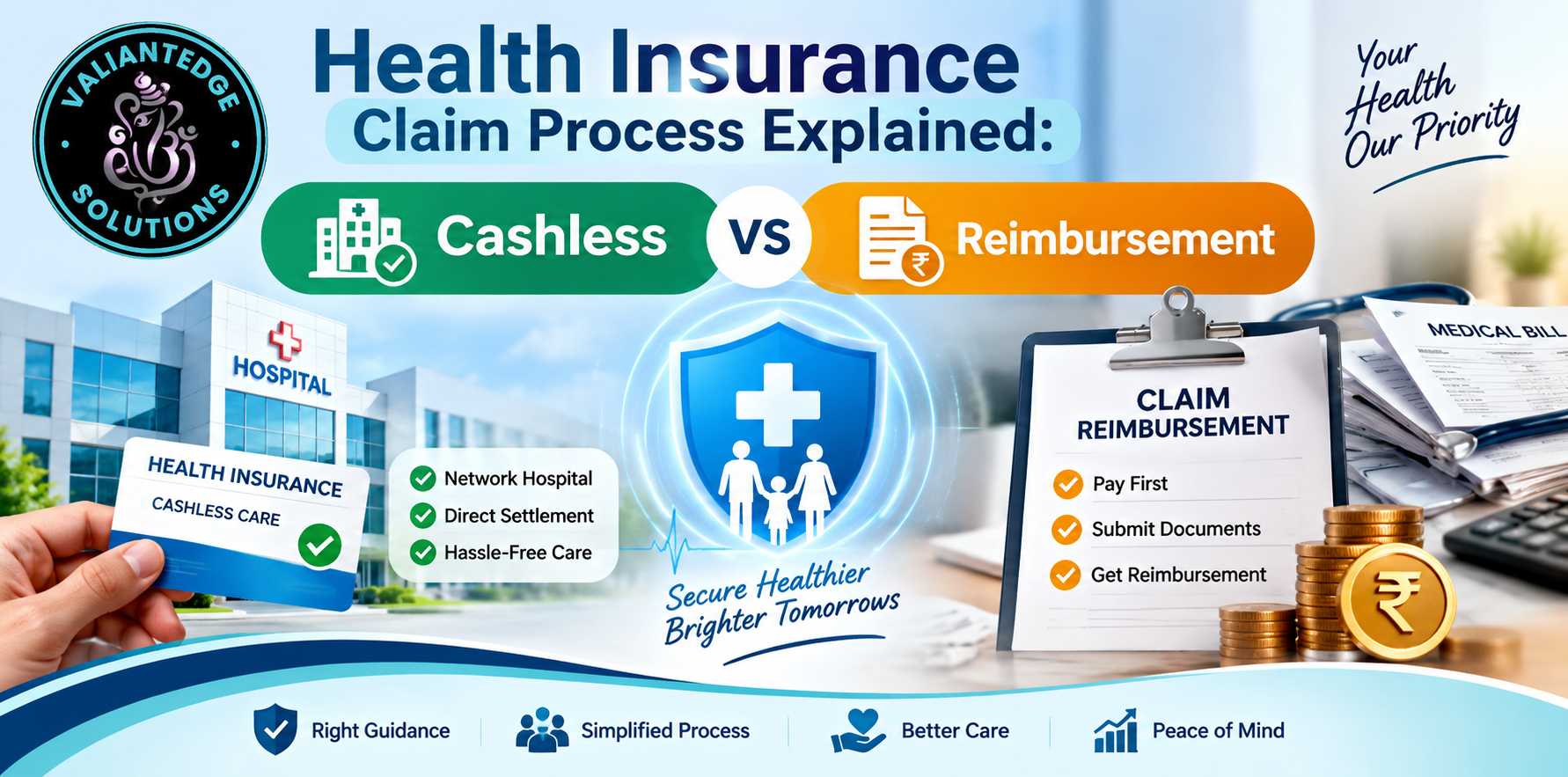
With cashless treatment at a network hospital, the insurer settles directly; you pay only excluded items. With reimbursement, you pay first and claim later with bills and reports. Two practical tips: first, check that the hospitals your family actually uses are in the network before buying; second, in an emergency admission at a non-network hospital, you can still claim by reimbursement — keep every original bill, prescription and discharge summary.
Porting: Upgrading Without Losing Waiting-Period Credit
IRDAI portability rules let you switch insurers while carrying forward the waiting periods you have already served. Apply at least 45 days before renewal, never let the old policy lapse mid-porting, and disclose your claim history accurately. Porting is the right fix for anyone stuck in a policy with room-rent caps or sub-limits — the mistake is buying a “fresh” policy instead and restarting all waiting periods from zero.
Tax Benefits Under Section 80D
| Premium paid for | Deduction limit (old regime) |
|---|---|
| Self, spouse & children | ₹25,000 |
| Parents below 60 | + ₹25,000 |
| Parents 60 or above | + ₹50,000 |
| Preventive health check-up | ₹5,000 (within above limits) |
A family paying for senior parents’ cover can thus deduct up to ₹75,000 a year — a meaningful subsidy on the real cost of protection.
Common Mistakes Families Make
- Buying purely on premium and discovering room-rent caps at the billing counter.
- Hiding pre-existing conditions — the top cause of claim rejection. Disclose everything; a loaded premium is infinitely better than a rejected claim.
- Adding parents to the family floater, inflating everyone’s premium.
- Waiting until a health scare — every condition diagnosed before purchase becomes a PED with a waiting period.
- Letting the policy lapse at renewal — continuity is what makes waiting periods finish and NCB accumulate.
- Ignoring the claim-settlement record of the insurer; check IRDAI’s published ratios and complaint volumes.
Step-by-Step Buying Checklist
- Decide structure: floater for the nuclear family + separate policy for parents.
- Fix sum insured: ₹10 lakh base minimum in metros + super top-up to ₹25 lakh.
- Shortlist plans with no room-rent cap, no disease sub-limits, no co-pay.
- Compare waiting periods, restoration terms and NCB rules.
- Verify your preferred hospitals are in the cashless network.
- Disclose complete medical history for every member.
- Complete any required medicals; read the policy in the free-look period.
- Diarise the renewal date and enable auto-pay.
Frequently Asked Questions
Which is the best health insurance company in India?
There is no single “best” — the right insurer depends on your city’s hospital network, your family’s health profile and the specific plan variant. Compare claim settlement ratios, complaint ratios and the seven clauses above rather than brand advertising.
Can I buy health insurance for my parents who have diabetes?
Yes. Expect a premium loading or a PED waiting period. Senior-specific plans and some insurers’ day-one PED variants can shorten the wait. Full disclosure is essential.
Is maternity covered in family floater plans?
Only if the plan includes a maternity benefit, almost always with a 2–4 year waiting period and a sub-limit. Plan the purchase well before planning the child.
What is not covered by health insurance?
Typical exclusions: cosmetic procedures, dental (unless accidental), self-inflicted injuries, substance-abuse treatment, unproven therapies, and PEDs during the waiting period. The policy wording’s exclusion list is mandatory reading.
Should I buy online or through an advisor?
Premiums are the same either way. An advisor earns their place at claim time and when your case is non-standard — senior parents, PEDs, porting, or structuring base + super top-up across insurers. We provide free lifetime claim assistance with every policy we place.
Decoding the Premium: What You Are Actually Paying For
Family floater premiums are driven by five inputs, in roughly this order of impact:
- Age of the oldest insured member — the reason parents belong on their own policy.
- Sum insured and add-ons — though doubling cover rarely doubles premium; going from ₹5 lakh to ₹10 lakh often costs only 25–40% more, and super top-ups are cheaper still.
- City zone — insurers price metros higher; some let you choose a lower zone with co-pay if treated in a higher one.
- Medical history and BMI — disclosed conditions can bring loadings or exclusions.
- Plan richness — no-cap room rent, day-one PED variants and OPD covers all cost extra; pay for the ones that match your family’s realities.
Age-Band Pricing and the Renewal Premium Curve
Health premiums step up as members cross age bands (typically 36–40, 41–45, and steeply after 60). Before buying, ask for the insurer’s premium chart across bands, not just this year’s quote. A plan that is ₹2,000 cheaper today but 30% costlier in the 46–50 band is no bargain, because switching later means fresh waiting periods (unless ported) and fresh underwriting of any conditions you develop meanwhile. You are choosing a 30-year partner, not a one-year price.
Networks, TPAs and the Quality of Claims Service
Two policies with identical wording can deliver very different experiences:
- In-house claims vs TPA: insurers that process claims in-house often settle cashless requests faster; TPAs add a layer. Neither is uniformly better — ask about current turnaround times for your city.
- Network depth where you live: a 15,000-hospital national network means little if the three hospitals nearest your home are excluded. Check by pin code.
- Complaint ratios: IRDAI publishes complaints per 10,000 claims; pair this with the settlement ratio for a fuller picture.
- Preferred networks: some plans offer zero co-pay or discounts within a preferred subset of hospitals — useful if that subset includes hospitals you would actually use.
Special Family Situations
New parents and newborn cover
Standard floaters add a newborn only from 90 days; maternity-benefit plans often cover the baby from day one under the maternity limit. If you are planning children, sequence matters: buy the maternity-inclusive plan 3+ years ahead of need, or accept that delivery costs stay out of pocket and simply add the baby at 90 days.
Single-parent families
A floater with one adult + children is priced attractively, but consider the restoration clause carefully — with a single earning adult, that adult’s own hospitalisation is both the health event and the income event. Pair the floater with a critical illness lump-sum plan.
Families with a member who has diabetes/hypertension
Three routes: (a) standard plan with PED waiting period served quietly for 2–4 years; (b) PED-buyback add-on shrinking the wait to 1 year or even day 30; (c) chronic-care variants that accept the condition from day one with wellness-linked pricing. Route (b) or (c) usually wins when the condition is established; get quotes for all three.
Adult children and multi-generation households
Children typically stay on a floater until 25; after that they need their own policy. Encourage them to buy at 25–26 — it locks clean underwriting for life and their premiums are tiny. Grandparents beyond 65–70 may find senior plans with co-pay the only realistic option; a larger co-pay with a genuinely usable network beats a co-pay-free plan no nearby hospital honours.
Wellness Benefits, Discounts and the Fine Print Behind Them
Modern plans market step-count discounts, health check-ups, OPD credits and renewal-premium waivers. Treat these as tiebreakers, not deciders: a 10% wellness discount on a plan with a room-rent cap is still the wrong plan. Do use the free annual health check — but know that its findings must be disclosed at any future upgrade or port, which is one more reason to buy adequate cover early rather than upgrading after a scare.
Worked Example: Structuring Cover for a Real Family
The Mehras: Amit (38), Priya (35), kids 8 and 4, Amit’s parents (66, 63, father diabetic), living in Noida. Our recommended structure:
| Policy | Cover | Approx. annual premium |
|---|---|---|
| Family floater (Amit, Priya, kids) | ₹10 lakh, no room cap, restoration | ₹22,000–28,000 |
| Super top-up (same four) | ₹40 lakh over ₹10 lakh deductible | ₹7,000–10,000 |
| Parents’ floater (senior plan) | ₹10 lakh, 20% co-pay, day-one PED variant for diabetes | ₹55,000–70,000 |
Total: roughly ₹90,000–1,05,000 a year for ₹50 lakh of family protection plus ₹10 lakh for parents — with up to ₹75,000 of it deductible under 80D (old regime). Compare that with the ₹3–4 lakh a single week of ICU + surgery can cost, and the structure explains itself.
Renewal Discipline: The Annual 10-Minute Audit
- Did anyone’s health change? Disclose new conditions at renewal if the insurer asks; never conceal at upgrade time.
- Has your sum insured kept up with two years of medical inflation? Consider raising it or widening the super top-up.
- Check the NCB applied and the restoration terms on the renewal notice.
- Re-verify your key hospitals are still in-network.
- If the plan has aged badly (caps, co-pays, premium spikes), start porting 45–60 days before expiry.
Micro-FAQ: Quick Answers for Busy Buyers
Can I split the family across two insurers?
Yes - and it can be smart: parents with one insurer whose senior plans excel, the nuclear family with another. Manage two renewals, gain best-of-breed clauses.
Does the sum insured cover each person or the whole family?
In a floater it is shared by all members per policy year; restoration refills it once exhausted. Individual policies give each person their own limit.
Are day-one accident claims really covered?
Yes - the 30-day initial waiting period does not apply to accidental injuries.
Is dental or eye care included?
Only when arising from accidents or as part of listed procedures (e.g., cataract after its waiting period); routine dental/vision needs an OPD add-on.
What happens at claim time if I moved cities?
Your policy works nationwide; just re-verify the new city's network hospitals and update your address for zone-based plans to avoid co-pay surprises.
Health Insurance Terms Decoded in One Minute
- Sum insured: the annual pool the insurer will pay from.
- Floater: one pool shared by listed family members.
- PED: pre-existing disease - anything diagnosed or treated before purchase.
- Co-pay: your fixed percentage share of every claim.
- Sub-limit: a cap on specific expenses (room rent, specific illnesses) inside the sum insured.
- Deductible: the amount you bear before a top-up policy starts paying.
- Restoration: automatic refill of an exhausted sum insured within the year.
- NCB: a bigger sum insured (or discount) earned for claim-free years.
- Portability: switching insurers while keeping served waiting periods.
- Moratorium: the continuous-cover period after which non-fraud claims cannot be denied for non-disclosure.
Bookmark this glossary; every brochure you read from now on becomes twice as fast to evaluate, and every clause in this guide will map to one of these ten terms.
The Bottom Line
The best family health insurance plan is the one with an adequate, inflation-proof sum insured, clean fine print (no room caps, no sub-limits, no co-pay), a strong restoration benefit and an insurer that pays claims promptly. Structure it as a floater for the nuclear family, a separate policy for parents, and a super top-up over everything — and you will have metro-grade protection at a small-town price.
Want us to shortlist plans for your family? Share your family members’ ages and city, and our licensed advisors will send a free comparison across 25+ insurers — with every clause in this article already checked.